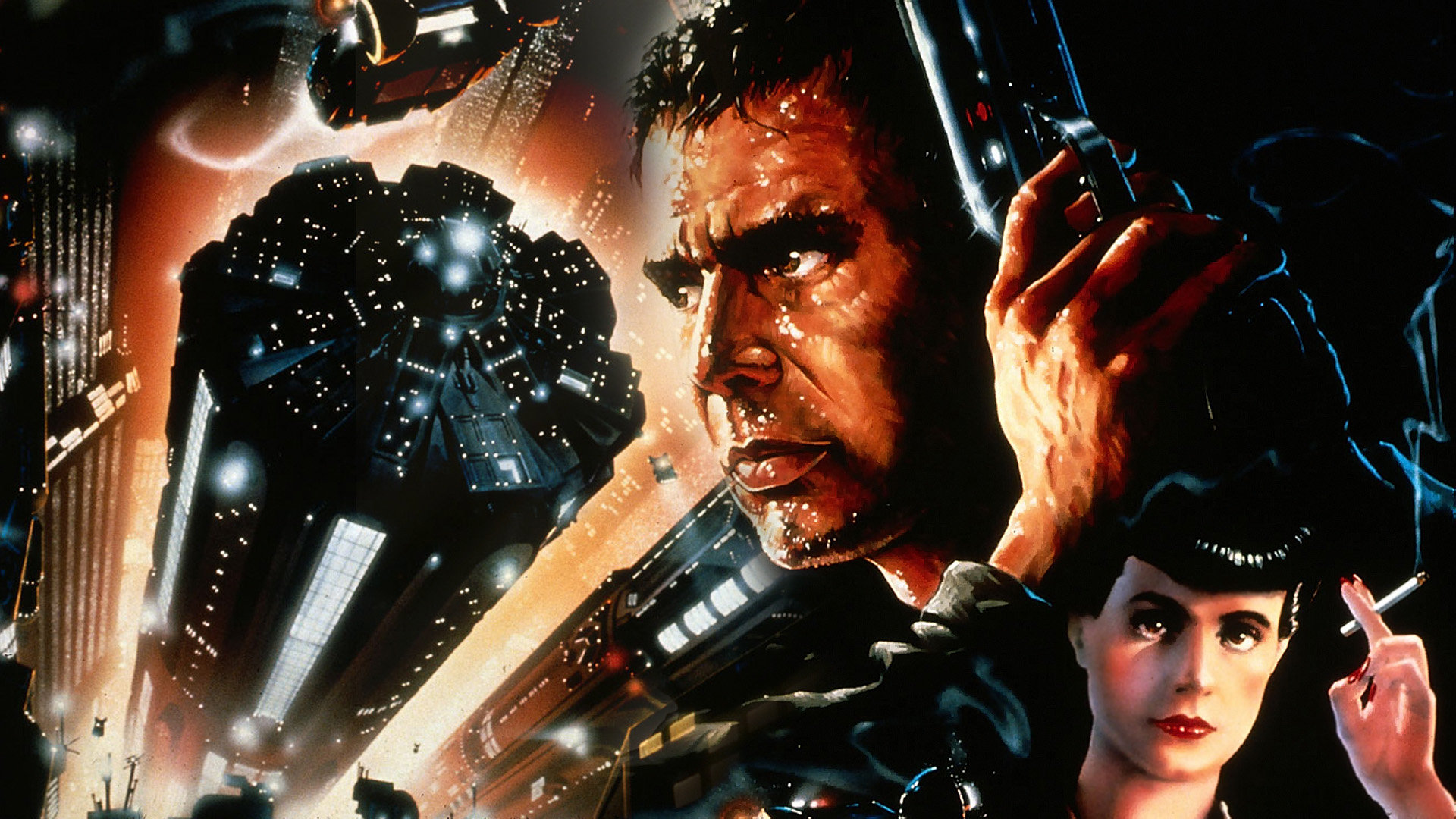
Blade Runner
Its been 37 years since the original release of Blade Runner. It’s taken a multitude of versions to truly be understood for the great film it was meant to be. Touching genres such as cyberpunk and neo-noir, Blade Runner was a film that could be argued to be ahead of its time, and that may be a reason that it didn’t land with audiences when it first released. It’s a methodical film, one that lets the characters breath, and the story beats are played out with the anticipation of a smart audience that knows how to keep track of the concepts presented to them. Now, when thinking about the legacy of Blade Runner, it’s easy to see how it has impacted films that came after it. And while there’s quite a heavy focus on futuristic technology, it really is a story about humanity, and what being human really means.
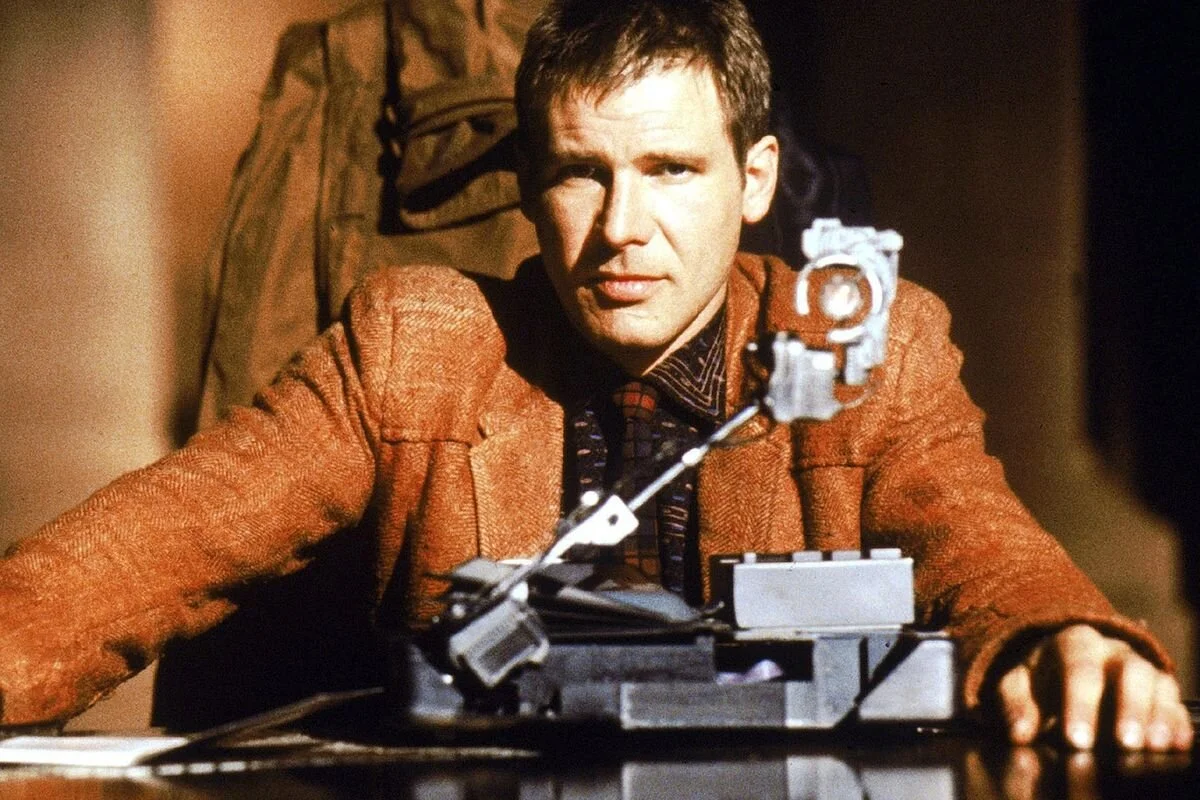
Rick Deckard, played by the charismatic as ever Harrison Ford, is a retired blade runner. Blade runners are trackers known for their expertise in finding beings known as replicants and retiring (killing) them. After being “arrested” by fellow officer Gaff, he’s taken back to his old place of work and informed that four replicants have returned to Earth illegally. Replicants are born to be slaves, created with a predetermined lifespan in mind to prevent them from becoming too human and attempting to create a life for themselves. Initially refusing, Deckard is swayed after a threat that there is no other option for him and learning that another blade runner Holden was killed while investigated one of these escaped replicants. He then sets out to begin his task in trying to understand the new line of replicants: the Nexus-6, a new version much more human than any of the previous models. Deckard travels to meet the creator of these bioengineered beings, Eldon Tyrell, owner and founder of the Tyrell Corporation. It’s here that he’s asked to test the blade runner’s means of determining if a being is a replicant, the Voight-Kampff test, on his assistant Rachel, the femme fatale of the film.
Of all the roles Harrison Ford has played, Deckard Shaw may be his most nuanced. He’s a man with a questionable sense of morales, and as a result, he is put into situations that make him quite uncomfortable. As a film that relies heavily on conversations and the use of character moments to progress the story, Ford manages to make a character that could have been one-note into something so much more. Over the course of the film, Deckard learns to understand the feelings and beliefs of the replicants, through his adversaries and friends. Seeing the character progress is exciting, but subtle. If these developments were on the surface, he wouldn’t be so interesting, but seeing it bubble just below the surface makes it that much better and fits the story Ridley Scott is trying to convey. His main adversary, the replicant Roy (played by Rutger Hauer), is menacing, but to a degree, he is misunderstood. He’s a being who has become conscious, and fears for the end of his life, so he is doing whatever is necessary to postpone his imminent shutdown. These clashing ideals manage to make the cat and mouse game that much more interesting.
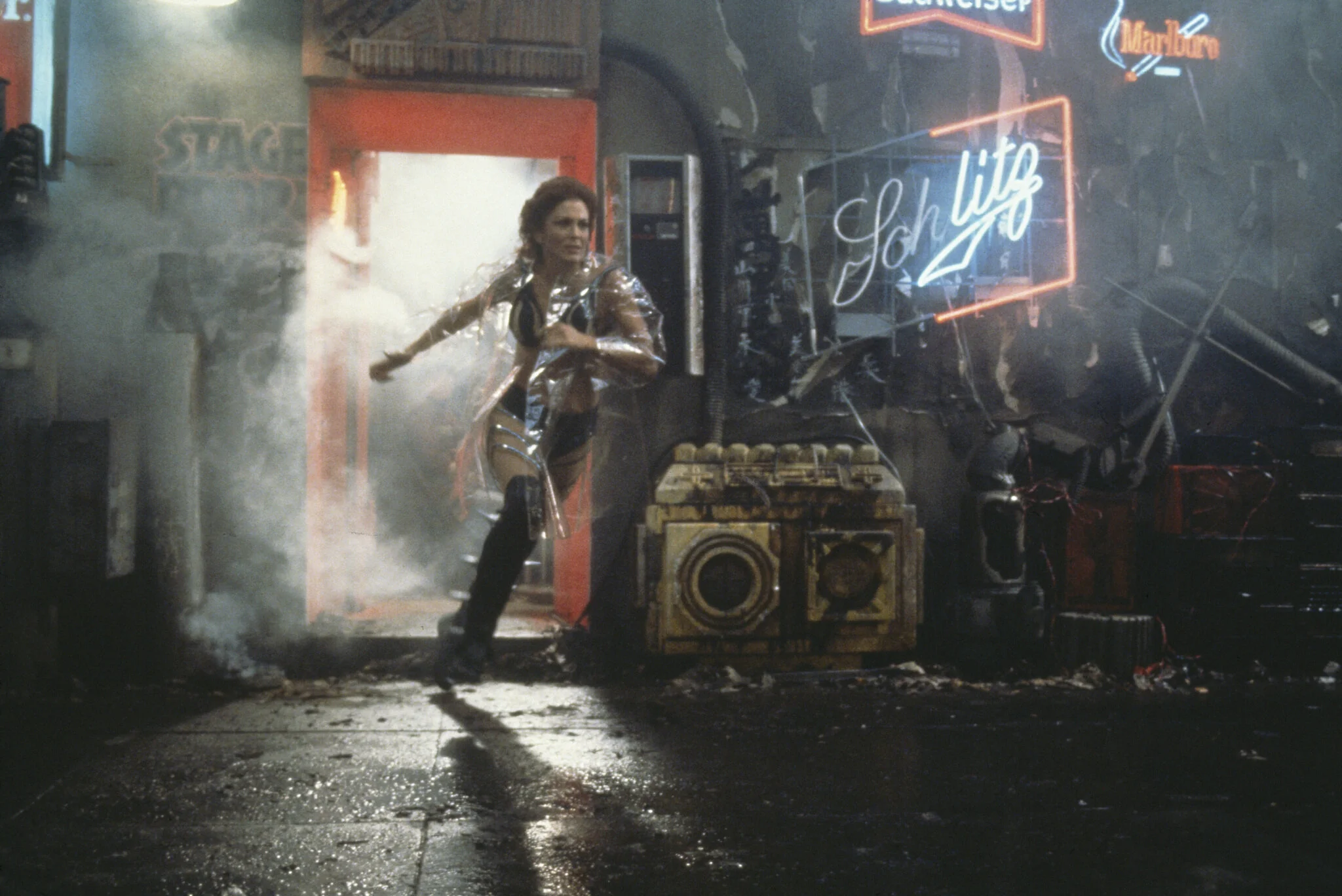
A character embodying a theme usually is a rather on the nose way to get across a point in a movie. In Blade Runner though, Ridley Scott and Sean Young manage to take the character of Rachel and make her important and fit the narrative on her own merit. Rachel is a replicant based on the ideal proposed by her creator Tyrell “More human than human.” She is given a series of memories from his nieces, and with this, she struggles with who she is. Is she just a machine built to serve a purpose, or is she alive and deserving of a life of her own? Her relationship with Deckard helps to grow both of them as characters, and also shows how layered this narrative and set of thoughts can be. How can we determine what makes a being human? There isn’t a cookie-cutter way to determine just what makes someone alive, but Blade Runner challenges the viewer to think through this dilemma long after the final shot has rolled.
Humanity and identity aren’t the only themes presented in this fascinating neo-noir. Something that is prevalent in this story is the use of eyes as a narrative piece, along with the overall idea of sight. Throughout the film, replicants of any kind are shown to have eyes that glow, giving off a sense of bioengineering or artificial creation. Often known as windows into the soul, the eyes are incredibly important in expressing emotion. Scott even goes as far as to convey this in an interview when he states “I was also trying to say that the eye is really the most important organ in the human body, It’s like a two-way mirror… the eye gives away a lot.” Following this same trend, replicants in Blade Runner are commonly known to connect memory with visual cues. Whether it be something like photos or even memories, they connect an emotional response with an image either physical or mental. It’s an interesting take on something that can often go overlooked in what makes someone tick.
Blade Runner isn’t just a feast for the mind, it is a feast for the eyes and ears as well. With very heavy use of synthesizers, Ridley Scott and Vangelis, the artists behind the soundtrack, evoke a sense of neo-noir that fits the narrative of the film. It’s not necessarily the most incredible soundtrack ever placed in a film, but its purpose here is clear and it serves that purpose excellently. The cyberpunk aesthetic of this film also helps to tap into humanity’s raw longing for the future, while also showing it won’t all be beautiful neon signs and fancy cityscapes. It is willingly to show the grime and dirt of a world of this nature, contrasting the beautiful higher architecture with the world the majority live downtrodden on the ground level. Much of the world is covered in a tint of blue, with other colors only being used to pop on-screen or evoke an emotional response, both of which work extremely well. Scott’s usage of many different cues of the noir genre is also clearly present: heavy smoking, whiskey-drinking, and a constant downpour. It all works excellently for the film and helps to solidify the tone it is creating.
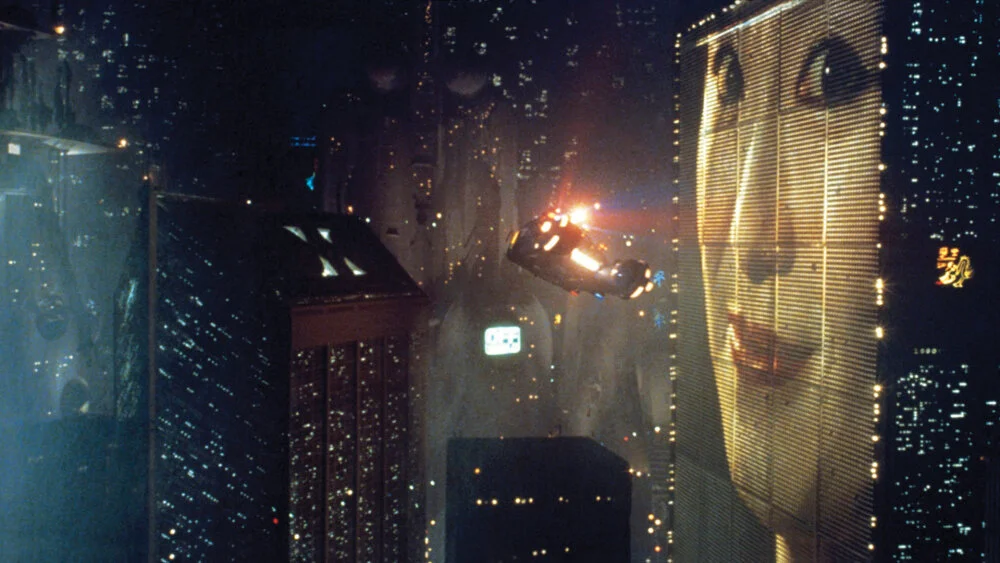
With excellent performances from Sean Young, Harrison Ford, and Rutger Hauer, Blade Runner is a film that makes it’s world feel truly alive. You’re excited about what comes next, and you’re left with more questions than answers. For some, it may be something they’d like to avoid, but in the case of Ridley Scott’s excellent neo-noir, it’s at it’s best when it’s challenging the audience to draw its own conclusions. It’s methodical, slow, and all the better for it. Blade Runner isn’t a story about stopping the bad guys, it’s about understanding differing points of view, and making how we can sympathize with those unlike our own.
Angel and I have been on a kick with this personification of machines area of film, and it’s most likely not going to stop any time soon as we’ve enjoyed both Her and Blade Runner. Blade Runner is a film I saw in the past, and I loved the aesthetic, but upon second viewing I really gained an understanding for the film I didn’t have upon first viewing. This is something I recommend to every fan looking to gain a deeper understanding of the stories they enjoy, don’t be afraid of a second watch! I’ll see you all next week. - John