Star Wars: Lost Stars
I’ve never been the most consistent reader. When I was young I used to love a series called Redwall, focusing on a world inhabited by small woodland creatures and their challenges. It felt great to immerse myself in a world even if the narrative shifted between each book. Over time I grew out of touch with Redwall and really stopped reading in general. I would read some stories that were required of me in highschool, but I never felt drawn to it like I was as a child. Recently with work starting to really take hold of a large portion of my life, I found the opportunity for a return. Audiobooks have become commonplace for many now and as I can’t spend time at my desk reading, it’s a welcome alternative. Over the past few months, I’ve finished 7 audiobooks, all but one focusing on Star Wars. The most recent of which being the phenomenal Lost Stars, a genre bending story for the ages.
Lost Stars is the story of two star-crossed lovers from their youth at the beginning of the Empire, to their young adulthood in the aftermath of the Galactic Civil War. On the mountainous Outer Rim planet of Jelucan we meet Thane Kyrell and Ciena Ree two young children with aspirations to join the Imperial Star Fleet. A once in a life time encounter with Grand Moff Tarkin as he welcomes the planet into the Empire pushes them together and into a friendship spawning from their love of flight. These two come from different ideological worlds: Ciena being a first-wave native of Jelucan, her family being there in the valleys and committed to their oaths towards their family and other natives; and Thane as a second-waver, his affluent but abusive family coming 250 years later living up in the mountains. As they grow up and train together, their friendship turns to love for one another, but their changing faith in the Empire puts them at odds.
Claudia Grey deserves all of the praise she can possibly receive for this story, specifically in developing Thane and Ciena, along with their combined dynamic. If someone were to just simply hear the premise of this story they would assume that Ciena sticking with the Empire would make her a villain, but she becomes one of the best examples in Star Wars of a tragic hero. Her life was based around becoming a part of the Empire and it has given her the chance to explore the galaxy and live out that fantasy. As a result, she feels indebted to the Empire and even when they commit atrocities she sees no way out because of her principles. I know at times I was angry at the idea of her sticking behind this terrible regiime, but Lost Stars manages to humanize a large portion of the lower level members of the Empire, giving them generally believable reasons as to why they’d be scared to abandon it. Ciena’s reasoning while possibly aggravating to some, sticks entirely to her character and makes it that much more painful to see her experiences as the novel progresses.
On the other side of the coin, Thane struggled early in life with an abusive family, to the point of scarring on his body and a preference to never return once him and Ciena were chosen to attend the Royal Imperial Academy on Coruscant. Thane wanted to make his way in the galaxy beyond his affluent family, and becoming a pilot for the Empire would have done that. But when he was assigned to the Death Star, he witnessed the destruction of Alderaan. Billions of lives destroyed for no reason, and it was simply the tip of the iceberg in the horrifying actions of the Empire. Over time, he became disillusioned with their actions and after a conversation with Ciena, he believed they’d both be leaving the Empire. But, when she ultimately told him she was bound by her oath, he found himself in a conversation with Wedge Antilles and chose to join the rebellion. It fit with the character of Thane, simply wanting to do good and show he was stronger than the roots he came from.
While Thane and Ciena’s relationship may at times feel like it was taken straight from Romeo and Juliet, it fits perfectly in this narrative. The development of their childhood friendship into love was fascinating, seeing how small events changed them and their views of one another. When it came to their opposing ideologies, each of their viewpoints made sense for who they are. Neither of them saw what they were doing as a black and white decision, but instead understood that it was morally grey. Their love for each other on the other hand, strayed true regardless of their allegiances. Going as far as being willing to compromise everything they stood for for one another. Because of this, there’s a layer of fear and concern between them that they could be the cause of death for the person they love, and as a result they are left partially compromised. This is a debate that anyone can understand, even if it’s used in a rather fantastical story. Gray manages to make two of the most fascinating protagonists in the Star Wars franchise through out the course of this novel, with their story ending in a place that doesn’t necessarily BEG for a sequel but demands one all the same.
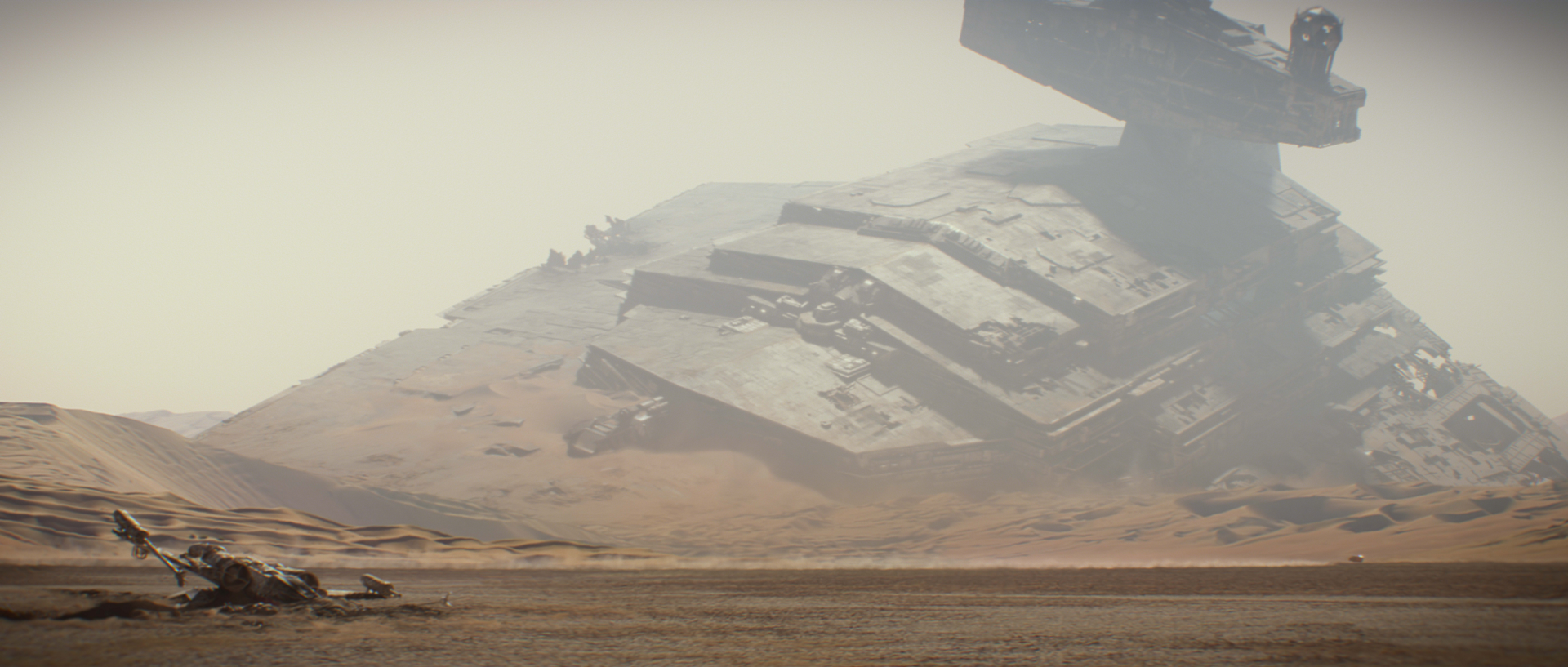
World building is critical to any novel’s success. Thanks to the massive world already developed by this franchise, Gray is able to side step that in order to give us something that we haven’t really had before: new perspectives on classic moments in the franchise. Think of the aforementioned destruction of Alderaan, the chase of the Millenium Falcon to Cloud City, and the multitude of battlegrounds between the Rebellion and the Empire (Yavin, Hoth, Endor, and Jakku). All of these moments so far have been witnessed from the sight of Luke Skywalker and his friends. But now, we are able to recognize just how much all of them are different when viewed from the eyes of the general soldier. The majority of it doesn’t make any sense from their eyes because in truth it’s just a power play by Palpatine, a man hiding behind propaganda that deceives his own supporters.
Luke himself is only mentioned in passing and the majority of what occurs with him doesn’t even get noticed, to the point where many believe his force abilities are fake. Thane and his squadmates go as far as being confused when a General Solo and Calrissian are mentioned at the Battle of Endor, names they don’t recognize what so ever. This differing world view makes you view the story of the Skywalker Saga in an entirely different light, offering scale to this conflict that often felt like it was only taking place on the few battlefields witnessed in the films. I’ve never felt more a part of these films than I did while reading this book, and that sense of placement makes Lost Stars worth it regardless of anything else.
Reflecting on this story as a whole, I find myself thinking of all different high points throughout the 600+ pages this story spans. The one that always draws emotion out of me in ways I didn’t expect was relationship between the two protagonists. I have spent more than my fair share of time in an immobile emotional state simply because I cared about these characters that much. It’s unfortunate that this book was released as a lead up to The Force Awakens, as it was given an obvious cut off point to avoid crossing with that film and what came after it. Now that the trilogy is completed, there is the potential for a continuation of this story, and you can bet I’ll be the first person in line to purchase it when it’s announced. If there’s one Star Wars book to read in the entirety of the new canon, it should be Lost Stars.