Ad Astra
Science fiction is a genre of film that has stretched, literally and figuratively, across the stars in all the different interpretations of what it can be. But within this genre, there’s an archetype to the characters that usually plays as a secondary plot of these interstellar space epics: someone seeking out who they are, and what role they are meant to play in this vast universe. It’s an excellent trait for a character to have, and there have been countless examples of its success. Look no further than someone like Luke Skywalker, a farm boy who longed to see the stars and become something more than what he knew himself to be. Or Captain James T. Kirk, a boy who loses his father, and is recruited into Star Fleet as a way to become the person he is meant to be. It may not always be so on the surface, but this archetype is often always there and behind many of the characters we come to love from science fiction and space epics. James Gray’s Ad Astra utilizes this trait, and bring its to the forefront in a vast and beautiful story that challenges the viewer to think bigger.
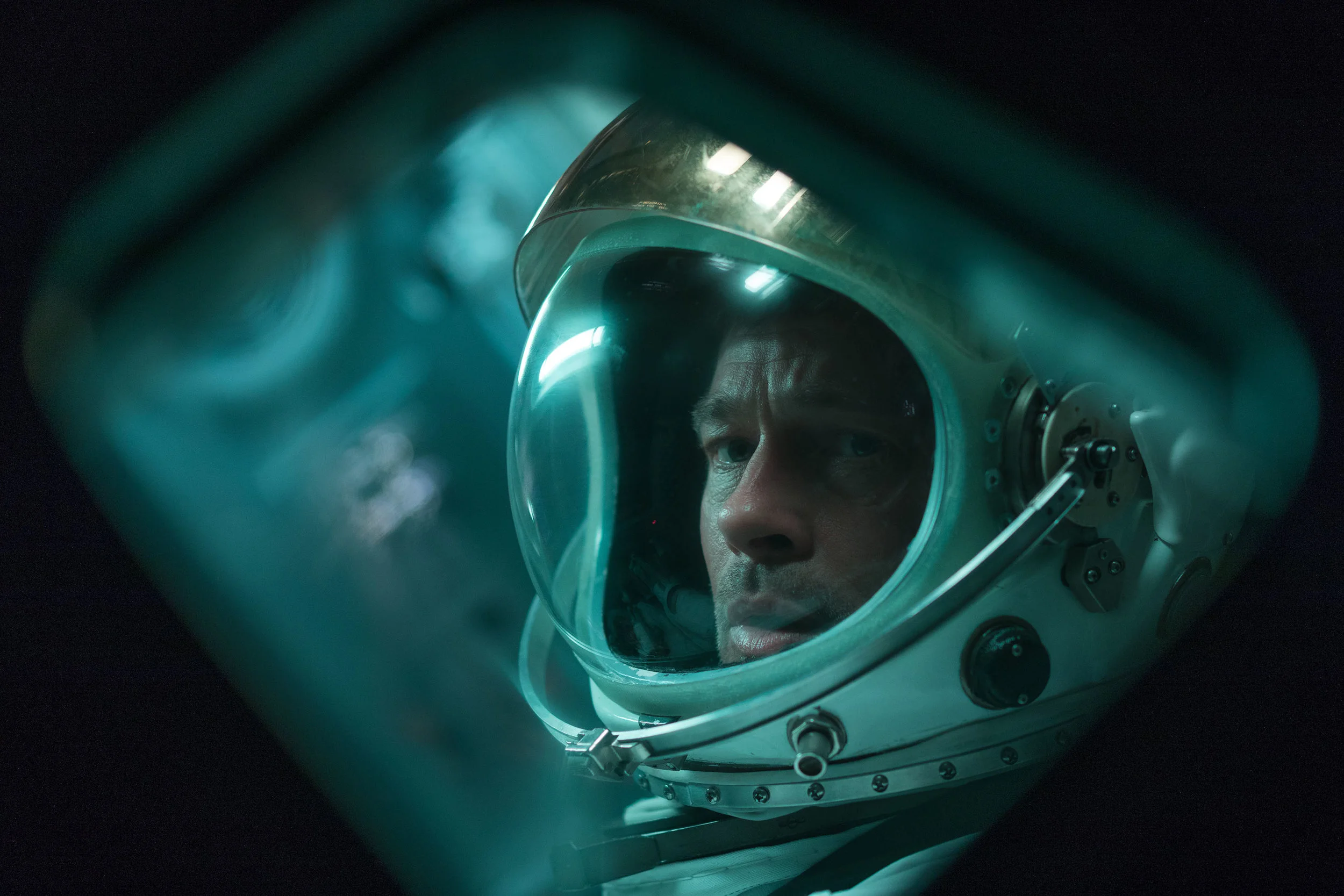
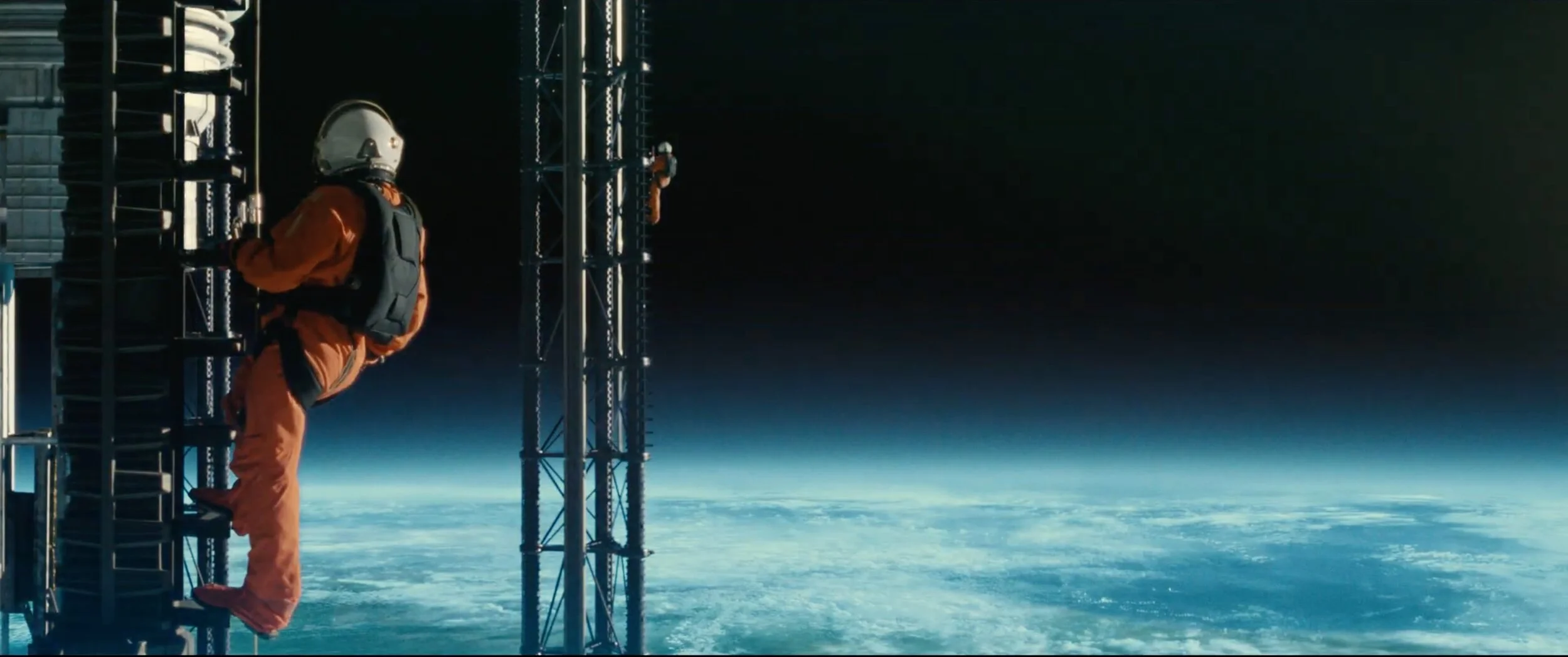
We’re introduced to this world through the eyes of our protagonist: Roy McBride played excellently by Brad Pitt. McBride is well known for staying cool under pressure, never failing a psych evaluation, and being able to keep his BPM under 80. Working high above the earth on a satellite meant to send signals into outer space, with the hope of reaching intelligent life, Roy is living a life that many would often dream of. But, as expected, not everything is great for our main character at the onset of this story. In a magnificent shot that forecasts the beautiful visuals of this film, Roy stares out into space briefly as silence envelops him. In a flash of brilliant blue light, a power surge shoots through the satellite, causing a catastrophic meltdown that sends Roy falling back to Earth. It’s an exhilarating start, but for those uninformed, it may give off the wrong idea about what this film is truly about.
At its core Ad Astra is a film about children and their parents. Roy’s father H. Clifford (played by Tommy Lee Jones), left on the first manned mission into the outer reaches of the solar system, with the goal to finally find the life that this civilization so desperately seeks to meet. Roy believed his father to be gone, but after speaking with members of U.S. Space Command, he finds out that the source of these electrical storms is coming from the project that his father manned, and that he is their best hope to make contact with him in order to prevent him from destroying human life. It’s a fascinating premise and allows for a multitude of sequences and scenes where Pitt is able to develop Roy as a character. At first, he is comfortable and understanding, but as the mission veers off course and into the unknown, this is when we see Pitt at his very best. He’s not that calm and collected person anymore, he’s nervous and afraid of what comes next, and what he might have to do to the man who gave him life.

As mentioned, this film is more than just a journey across space, as it’s the philosophical parts of this story that make it that much more fascinating. This is a film that goes to multiple levels with its characters and overall themes. Roy is searching for his purpose amongst the stars, and as he stretches further from that world and person he thought he knew, he begins to change and see the true person behind the facade. Intermingled between this story of discovery and a boy seeking his lost father, is a connection to something much more metaphysical than I truly expected: seeking our creator. Religion has always been something that has been tiptoed around when it comes to science fiction, but with the vast emptiness of space and a boy seeking the man who made him, it’s hard not to feel that connection. It’s made that much more clear with Roy’s father, a man who has become consumed with his goal to seek intelligent life outside of his own, even if it means leaving his family behind.
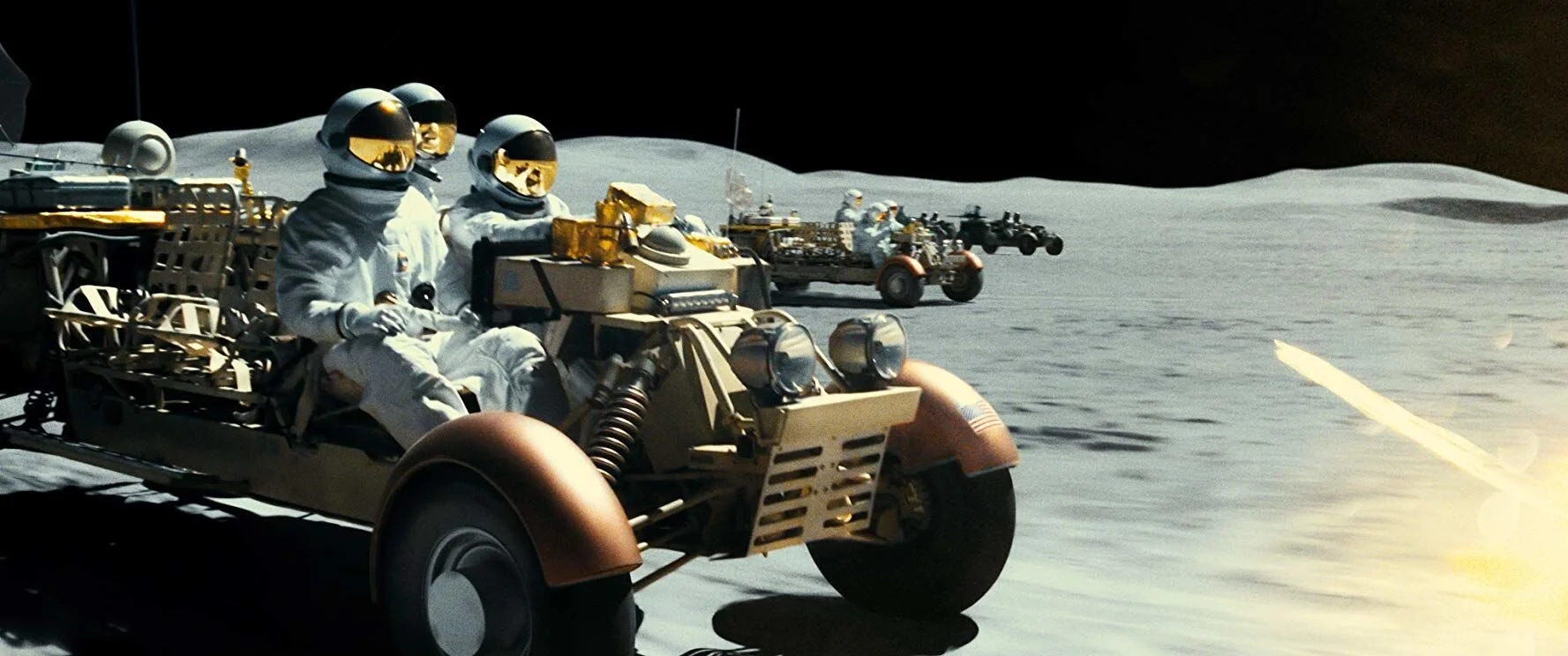
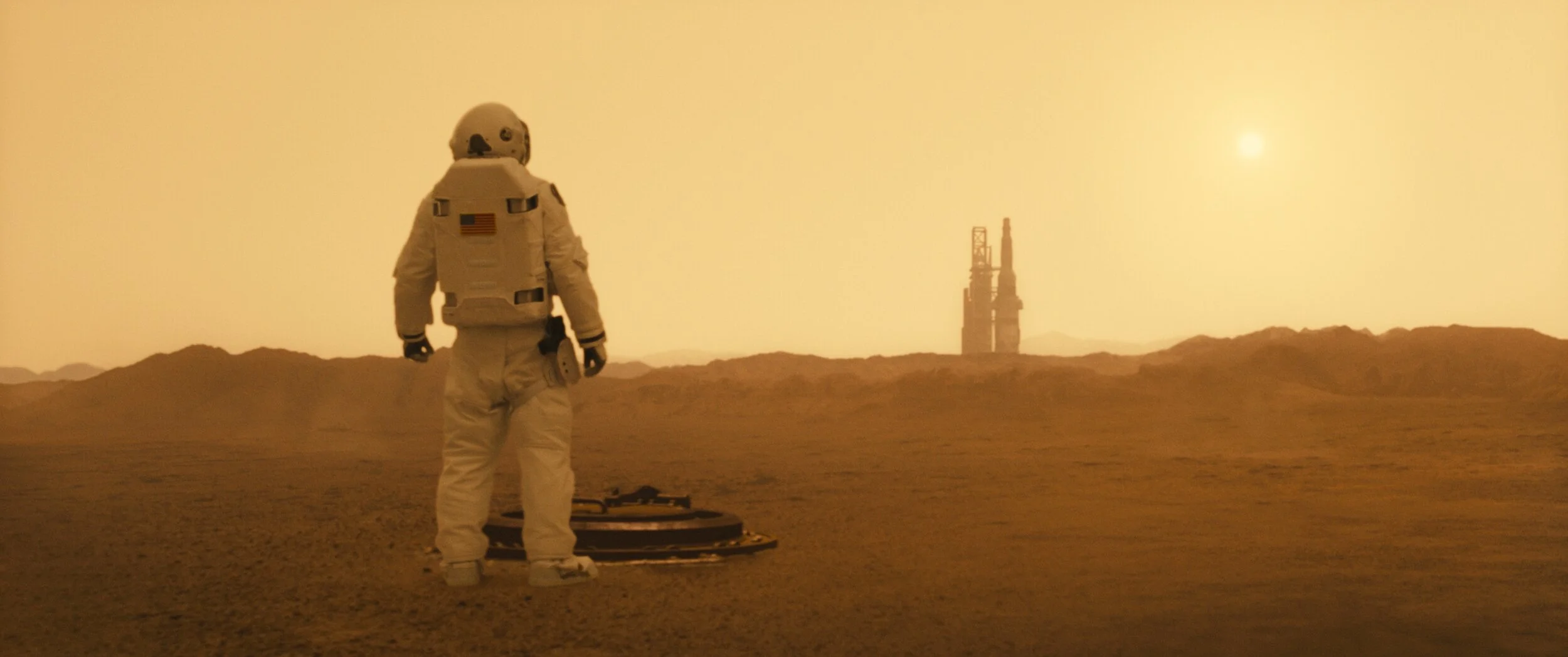
Visually, there are some specific choices made by director James Gray that challenged the idea of what makes space films beautiful. The use of color often feels rich, impactful, and purposefully limited. Whether it be the dusty red of an underground Mars base or the emptiness of the Moon, there’s alot of beautiful scenery that feeds into the overall feeling of loneliness and fear that is challenging Roy. Many space films will stretch the color palette to show off the beauty of space, but Gray isn’t interested in this. Space isn’t meant to be the draw of the movie, it’s meant to accentuate the story. Allowing the camera linger on Pitt, we’re told the true focus of our story: this man’s struggle to discover who he is meant to be. With the limited time that we’re shown the vast and magnificent beauty of space, it makes it even more special when we do see the tiny speck of life against that emptiness because it matters to the plot. Interwoven with this is also a beautiful score that captures the brilliance of the stars, and ominous nature of not knowing what is truly out there. It’s a fascinating mixture of feelings, and it allowed me to feel the story through the eyes of Roy.
Ad Astra isn’t anything like what I expected. In what easily could have been a film solely focused around visual fidelity of space, it instead is a telling character piece that tackles themes while often seen in films of this kind, aren’t explored to their fullest potential. I can’t help but feel a piece of myself in the character of Roy, and I think that’s a part of what makes the story so great. He’s a man who believed he understood who he was, but when things just begin to feel right, his world takes a turn. Ad Astra is a story that has been told across the history of film but through its use of the vast emptiness and unknown of what lies beyond, it’s able to make its character moments that much more powerful. Pitt is having arguably the greatest year of his film career, and his performance here may be his greatest to date. This a film that begs to be watched over and over again. A film that beckons you, as its title so aptly states in its translation, to the stars.